
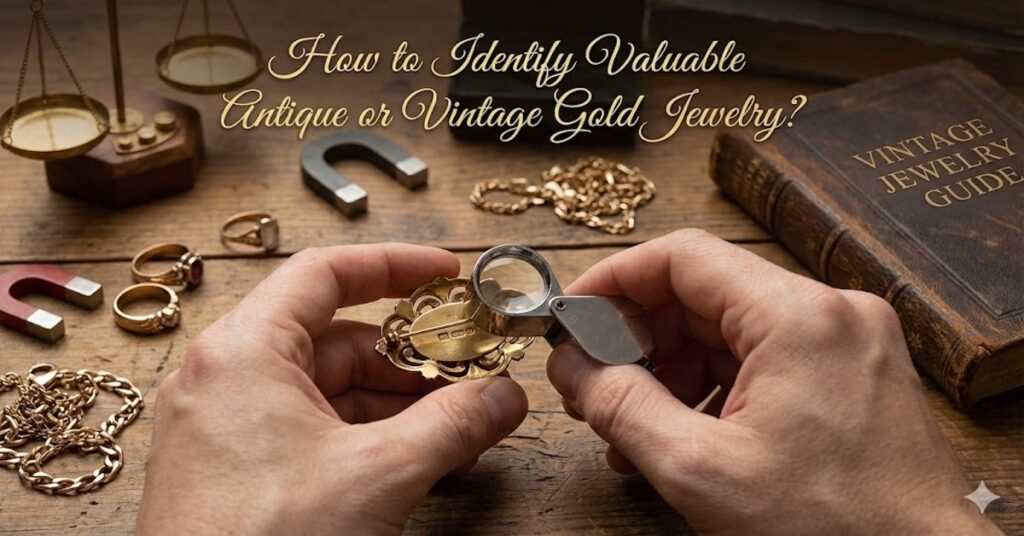
Antique and vintage gold jewelry has become increasingly popular among collectors, investors, and everyday sellers who want to understand what their pieces are truly worth. Older jewelry often reflects craftsmanship and design elements that are no longer produced today, which can make certain items highly valuable. Because of this, many people want to learn how to identify the qualities that separate regular gold jewelry from pieces with real historical or collectible value.
The challenge is that identifying value requires more than checking the weight or color. It involves examining hallmarks, evaluating craftsmanship, understanding design periods, and recognizing authentic aging. Taking time to assess these details can help you avoid undervaluing a piece or overlooking hidden worth.
Quick answer: You can identify valuable antique or vintage gold jewelry by checking purity stamps, studying hallmarks, examining craftsmanship, recognizing period-specific designs, confirming gemstone authenticity, and verifying natural wear that indicates age.
Understanding What Makes Gold Jewelry Antique or Vintage
Gold jewelry falls into different age categories. Vintage pieces typically come from the mid-20th century or earlier, while antique jewelry is usually over 100 years old. These age differences affect rarity, design style, and overall demand.
Age also influences how a piece was made. Older jewelry often includes hand engraving, hand soldering, and distinctive construction methods that add to its value. Many collectors appreciate antique and vintage jewelry because it reflects cultural history and unique artistry.
Checking Gold Purity and Markings
The first step in evaluating gold jewelry is checking its purity. Gold purity is usually marked with stamps such as 10K, 14K, 18K, 22K, or 24K. Higher numbers indicate a greater gold content, which typically increases the piece’s value.
Some older pieces may use European purity marks, such as 375 for 9K or 750 for 18K. Understanding these markings helps determine the gold content more accurately.
It is important to note that some antique jewelry may not have clear stamps because hallmarking rules were not always standardized. In these cases, professional testing can confirm purity.
Recognizing Hallmarks and Maker’s Marks
Hallmarks are one of the best tools for identifying the origin and age of gold jewelry. These marks can reveal the manufacturer, designer, or region where the piece was created.
Common locations for hallmarks include the inside of rings, the clasp on necklaces or bracelets, or the backing of brooches. Maker’s marks may appear as initials, symbols, or full names.
A recognizable maker can significantly increase value. For example, jewelry produced by well-known designers or specific workshops is often more desirable. Researching these marks or consulting an expert can uncover information that adds to the piece’s worth.
Assessing Craftsmanship and Design Details
The craftsmanship of antique and vintage jewelry often stands out. Handmade pieces typically include small imperfections or subtle tool marks, which indicate that the item was crafted individually rather than mass-produced.
Examining solder points, engraving depth, and setting quality helps determine whether a piece was hand created. Pieces from certain periods also reflect specific design styles. For example:
Art Deco jewelry features geometric lines and bold symmetry.
Victorian pieces often include ornate details, filigree, or romantic motifs.
Mid-century designs may incorporate modern, minimalist shapes.
Recognizing these styles helps you date the piece more accurately.
Checking for Gemstones and Their Quality
Many antique and vintage pieces include gemstones. The presence of natural stones instead of synthetic ones can increase the value significantly. Older jewelry often features hand-cut stones, which may appear slightly irregular compared to modern precision cuts.
Gemstones should be checked for authenticity. Some stones common in vintage jewelry include sapphires, rubies, emeralds, pearls, and old mine cut diamonds. The setting style can also offer clues about the piece’s age.
Even if a gemstone is small, its quality and originality can influence the overall value of the jewelry.
Signs of Authentic Wear and Aging
Natural aging is a positive sign when evaluating antique jewelry. A piece that is truly old will show gentle wear, such as softened edges, patina, or slight discoloration in low-contact areas.
Patina is often a desirable feature because it confirms authenticity and adds character. However, it is important to distinguish between natural wear and damage. Excessive polishing can remove patina and lower the collectible value.
Pieces that appear too shiny or overly restored may have lost some of their original appeal.
When to Seek Professional Appraisal
Some items are too intricate or historically significant to evaluate on your own. In these cases, a professional appraisal is a smart choice. Appraisers use specialized tools and industry knowledge to examine hallmarks, materials, design periods, and craftsmanship.
Expert evaluation is especially important for:
- Designer pieces
- High-value gemstones
- Unusual hallmarks
- Jewelry with unclear purity markings
A proper appraisal provides documentation that helps when selling, insuring, or preserving collectible items.
Conclusion
Identifying valuable antique or vintage gold jewelry requires attention to hallmarks, purity, craftsmanship, design style, gemstones, and authentic wear. These details help determine a piece’s history, rarity, and market value. Understanding what sets older jewelry apart can help you make informed decisions when selling or collecting.
If you have gold jewelry that you would like evaluated, DMK Metal offers honest assessments and competitive pricing. Their team helps you understand the true value of your pieces and provides a simple, transparent selling experience.